60% of players quit when the reward lands 1.2 seconds late
A 1.2-second delay in reward delivery can drive 60% of users to quit, revealing why timing matters more than size in loyalty and payments
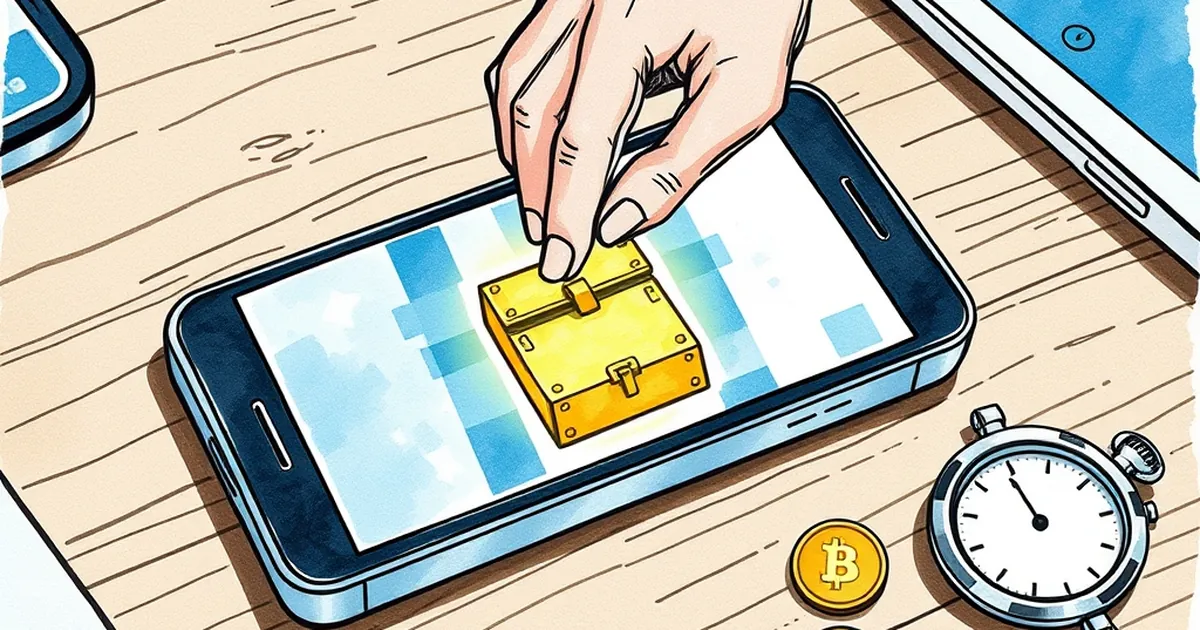
One point two seconds. That's roughly the time it takes to blink twice, or for a card terminal to decide whether it likes your chip. According to latency research that circulates widely in product and game-design circles, when a reward arrives about 1.2 seconds later than expected, a majority of users — the oft-quoted figure is 60% — simply walk away. Not because the reward was smaller. Because it was late. That gap between expectation and delivery is where behavioral psychology, payment infrastructure, and the economics of loyalty all collide, and it's worth asking why human beings are so exquisitely sensitive to a delay we can barely perceive.
The brain treats time as part of the reward
Behavioral economists have known for decades that we don't evaluate outcomes in isolation. Daniel Kahneman and Amos Tversky's work on prospect theory showed that we judge gains and losses relative to a reference point — what we expected, not what we got in absolute terms. A reward that arrives on time sets one reference point. The same reward arriving 1.2 seconds late sets another, and the brain quietly reclassifies it.
There's a physiological layer here too. Dopamine neurons don't simply fire when a reward appears; they fire in anticipation, and they encode prediction error — the gap between what was expected and what actually happened. A reward that lands exactly on schedule produces a clean, satisfying signal. A reward that lands late produces a different one, closer to ambiguity than to pleasure. The reward hasn't shrunk, but the neural accounting has already recorded a small loss.
This is why the 1.2-second figure is more than a curiosity. It suggests the threshold isn't about patience in any moral sense. It's about a mismatch between a prediction and an outcome, and the brain is astonishingly unforgiving about mismatches.
Variable-ratio reinforcement, without the mythology
Anyone who has read B.F. Skinner's work on variable-ratio reinforcement knows that unpredictable reward timing can produce remarkably persistent behavior. That's the famous finding. What gets less attention is the flip side: predictable timing, once established, becomes a contract. Break the contract and the behavior collapses faster than it would have if no schedule had ever existed. The 60% figure fits this pattern. Users weren't merely disappointed. They had internalized a rhythm, and the rhythm broke.
Where payments meet psychology
Here's where this stops being an abstract observation about app design and becomes something a payments professional thinks about daily.
Consider the moment a customer taps a card or phone at a terminal. The expectation is near-instantaneous: a beep, a green light, a receipt. When that flow stretches — a terminal that takes four or five seconds to authorize, a mobile wallet that shows a spinner, an online checkout that confirms the order but delays the loyalty points — something subtle happens. The transaction succeeded. The reward is real. But the feedback arrived late, and the customer's confidence in the whole system quietly erodes.
Card networks have spent enormous effort on this. Contactless payments were engineered partly around the psychological reality that a tap should feel like a tap, not like a request that is being considered. Visa and Mastercard both publish authorization targets measured in single-digit seconds for a reason. EMV chip transactions in the early 2010s famously felt slow to consumers in the United States, and a meaningful share of the friction complaints weren't about security — they were about waiting. The security was working. The perception was that something was wrong.
The loyalty points problem
Loyalty programs are where the 1.2-second principle gets most expensive. A customer completes a purchase, and the points don't appear for hours or days. From the issuer's perspective, the points are safe and will post. From the customer's perspective, the reward they were promised at the moment of decision has evaporated into a pending state. Every day of delay is a small withdrawal from trust, and trust is the actual product that loyalty programs sell.
Some issuers have responded with instant point posting at the point of sale, and the difference in engagement is measurable. Others have leaned into "pending" displays that at least acknowledge the reward exists. Both approaches share a premise: visible progress beats invisible certainty. A reward you can see, even before it's finalized, does more psychological work than a reward you're told will arrive eventually.
Decision-making under uncertainty is a timing problem
Kahneman's later work, and that of researchers like Dan Ariely, emphasized how much of our decision-making is shaped by the framing of a choice rather than its underlying economics. Timing is a form of framing. "You'll get $10 tomorrow" and "You'll get $10 in a week" describe the same reward with different frames, and the behavioral response is not linear — it's steeply curved. We discount the near future heavily and the distant future gently.
That curve has a practical implication for anyone building payment or reward products. The first few seconds of a delay are the most costly, psychologically speaking. A reward that arrives in 200 milliseconds feels instantaneous. A reward that arrives in 1.4 seconds feels broken. The marginal second between those two points carries more perceptual weight than the ten seconds that follow. This is why so much engineering effort goes into shaving milliseconds rather than seconds. It isn't perfectionism. It's targeting the part of the curve where behavior actually changes.
Risk-taking and the cost of hesitation
There's a related phenomenon worth naming. When people are uncertain whether a system is working, they don't simply wait — they take defensive action. They re-tap the card. They refresh the page. They open a second browser tab. They abandon the purchase and try again later, or never. In competitive markets, that hesitation is the whole game. A customer who is 95% confident the payment worked will complete the transaction. A customer who is 70% confident will hedge, and hedging is where conversion dies.
This is why the 60% figure, wherever it originally came from, resonates with product teams. It describes a population that has been trained by years of fast digital experiences to expect a specific rhythm, and that population has learned — rationally — to treat lateness as a signal. Sometimes it's a signal that the network is congested. Sometimes it's a signal that something is wrong. Either way, the response is the same.
What forward-looking teams are doing about it
The most interesting work happening right now isn't about making rewards bigger. It's about making the perception of speed match the reality of speed. Three patterns are emerging.
Optimistic UI. Show the reward before the backend has confirmed it, then quietly reconcile. The customer sees the points, the transaction resolves a moment later, and the experience feels seamless even when the infrastructure underneath is doing real work.
Progressive feedback. Instead of a single confirmation at the end, break the wait into visible steps. A terminal that shows "reading card" then "authorizing" then "approved" feels faster than one that shows nothing for three seconds, even when the total elapsed time is identical.
Pre-emptive acknowledgment. Tell the customer the reward is coming before they ask. Silence during a wait reads as failure. A single line of text — "points posting now" — resets the prediction and buys back the trust that the delay was about to spend.
None of these are glamorous. They're the kind of unglamorous work that separates payment products people love from payment products people tolerate. And they all rest on the same premise: in a world where the reward itself is often commoditized, the timing of the reward is where differentiation lives. The next competitive frontier in payments probably isn't a better rate or a bigger bonus. It's a faster blink.