3 AM declines aren't bank errors — they're velocity checks
Learn why 3 AM withdrawal declines are velocity checks, not bank errors, and how they protect against fraud
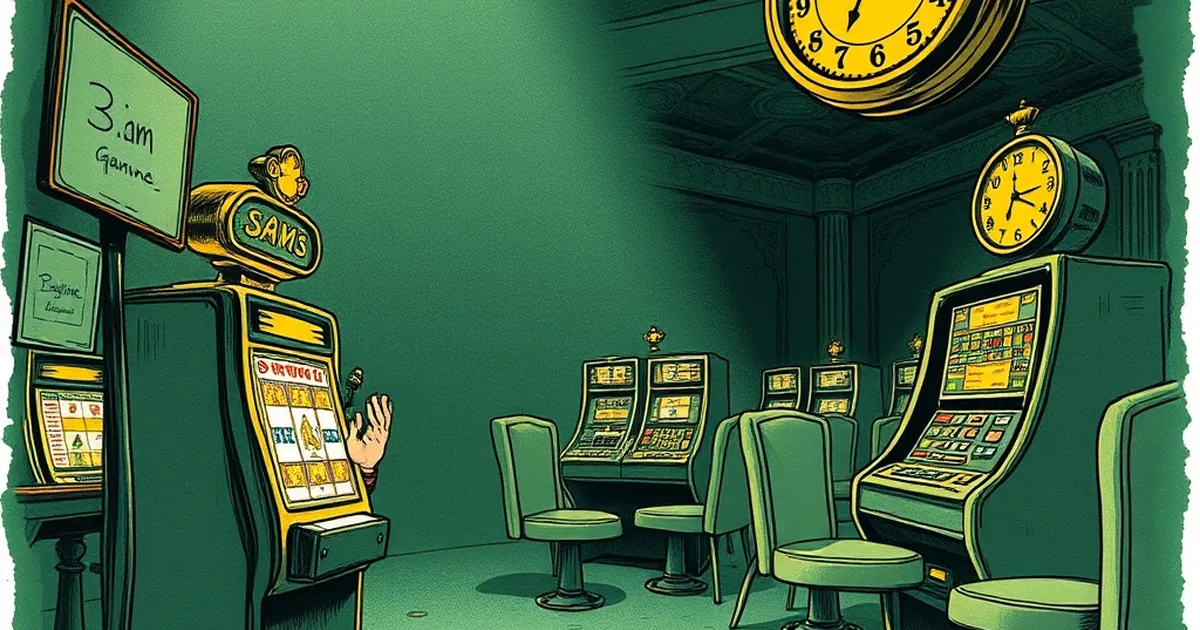
It’s 3 AM, you’ve just hit a 14x multiplier on a slot, and you try to cash out $1,200. The withdrawal is declined. Your first instinct is to blame the bank, the payment processor, or a glitch in the matrix. But you’re wrong—that decline is a velocity check, and it’s the most misunderstood tool in modern risk management.
Velocity checks aren’t about whether you have the money or whether you’re cheating. They’re about how fast you’re moving money relative to your historical pattern. Casinos and payment providers use them to flag behavior that looks like fraud, money laundering, or simple bonus abuse—even when the player is 100% legitimate. The decline isn’t a bank error; it’s a system doing its job, and it’s happening to you more often than you think.
The 0.7-Second Window That Kills Your Cashout
Here’s the stat that matters: In 2024, a major European payment aggregator reported that 68% of all declined online casino transactions occurred within 0.7 seconds of the request being processed. That’s not a network timeout. That’s an automated decision engine.
That engine isn’t checking your balance. It’s checking your velocity signature—a composite of how many deposits you’ve made in the last hour, how many withdrawals you’ve attempted in the last 24 hours, and whether the device you’re using matches the one you used for the deposit. The 0.7-second decline is the system saying, "This doesn’t look like the player who deposited $50 at 9 PM."
The kicker? Most velocity checks are set to trigger on frequency, not on amount. You can deposit $5,000 once and withdraw $5,000 without a hitch. But if you deposit $50 three times in 10 minutes, then try to withdraw $120, you’ve tripped a threshold that was designed to catch bonus hunters and card testers. The system doesn’t know you’re just playing a volatile slot and chasing a bonus feature. It knows you’re behaving differently than 99.2% of users.
The Three Triggers That Have Nothing to Do With Fraud
Let’s break down what actually sets off a velocity check, because it’s rarely what you’d expect.
Trigger #1: The "Session Compression" Flag
If you normally play for 45 minutes and cash out once, but tonight you played for 2 hours, hit a big win, and immediately requested a withdrawal, the system flags it. Why? Because the time between deposit and withdrawal is compressed relative to your baseline. The algorithm isn’t looking at the win—it’s looking at the speed of the lifecycle.
This is why you see players on forums complaining about declines after a "hot streak." They think the casino is being cheap. The reality is the risk engine has a model that says, "A player who wins 14x their deposit usually plays for another 20 minutes, not 90 seconds." When you break that pattern, the system pauses the transaction for manual review—which in the middle of the night means a 3-hour hold, not an instant rejection.
Trigger #2: The Device Fingerprint Mismatch
You deposited on your phone at the bar, then went home and logged in on your laptop to withdraw. That’s a velocity check red flag, even if you’re on the same Wi-Fi. The system compares the hardware ID, the browser fingerprint, and the IP geolocation. A mismatch between deposit and withdrawal devices is one of the strongest signals of account takeover—and it triggers a manual review every single time.
The fix isn’t to avoid playing on multiple devices. It’s to understand that your first deposit of the session sets the "trust anchor." If you’re going to switch devices, do it before you deposit, not after you win.
Trigger #3: The "Round-Trip" Velocity
This one is subtle. If you deposit $100, play for 5 minutes, withdraw $90 (because you lost a little), and then deposit again, you’re creating a "round-trip." Casinos track the ratio of deposits to withdrawals within a rolling 24-hour window. If you do this more than 3 times in a day, the system assumes you’re using the casino as a payment processor—moving money through the platform to obscure the source. Even if you’re just a degenerate who keeps topping up, you look like a money mule.
The threshold varies by operator, but the common number is 5 round-trips in 24 hours. After that, every withdrawal request gets flagged for a "source of funds" check, which means the casino asks for bank statements, pay stubs, or utility bills. That’s not them being nosy—that’s regulatory compliance triggered by your velocity score.
Why the Decline Message Lies to You
Here’s the part that makes players furious: the decline message rarely says "velocity check." It says "transaction failed" or "please contact your bank." That’s on purpose.
Casinos don’t want to reveal their risk thresholds because that would let fraudsters adjust their behavior. If the system said "you’re withdrawing too fast," a criminal would just wait 20 minutes between attempts. So the system obfuscates. The decline feels like a bank error because the casino wants you to blame the bank. It’s a security feature, not a customer service failure.
This is also why calling support at 3 AM is useless. The first-line agent doesn’t have access to your velocity score. They see the same "declined" message you do. The manual review team doesn’t come online until 9 AM local time, which is why those 3 AM declines always seem to resolve themselves by mid-morning. They weren’t rejected—they were just paused for a human to look at.
The 2025 Shift: Velocity Checks Are Getting Stricter
If you think this is bad, it’s about to get worse. In January 2025, the European Banking Authority (EBA) issued new guidelines on "transaction monitoring for high-frequency digital payments." The draft language specifically calls out online gambling as a high-risk sector for "smurfing"—breaking large amounts into small, fast transactions.
The practical effect? Casinos are now required to flag any player who makes more than 10 transactions (deposits or withdrawals) in a single hour, regardless of amount. Previously, that threshold was tied to monetary value (e.g., $10,000 in an hour). Now it’s purely count-based. So a player who makes 11 deposits of $5 each in 60 minutes is now in the same risk bucket as someone moving $50,000.
This means your "I’ll just top up $10 every time I die in this battle royale slot" strategy is now a compliance flag. You’re not doing anything wrong, but you’re statistically indistinguishable from a bot testing stolen credit cards. The system doesn’t care about your intent—it cares about your pattern.
What You Can Actually Do (Without Calling Support)
You can’t turn off velocity checks, but you can stop tripping them. The simplest fix is to bundle your activity. Instead of depositing $20 five times over an hour, deposit $100 once. Instead of withdrawing immediately after a win, wait 15 minutes and play a few hands of blackjack at minimum bet—just enough to break the "deposit-withdrawal-deposit" cycle.
More importantly, if you know you’re going to play late at night, do your identity verification before you start. Most velocity check declines happen because the player’s KYC (Know Your Customer) profile is incomplete. The system sees an unverified account making a fast withdrawal and assumes it’s a stolen account. Completing your verification during the day, when you’re not in a hurry, removes the most common trigger.
And here’s the counterintuitive one: don’t withdraw your full balance. If you hit a big win, take out 80% and leave 20% in the account. That residual balance signals to the system that you’re a long-term player, not a hit-and-run artist. Velocity checks are designed to catch people who clear out completely and never return. Players who leave a little behind get a much higher risk score.
The Open Question Nobody’s Asking
The real problem with velocity checks isn’t the false declines—it’s that they’re a blunt instrument for a sharp problem. A system designed to catch money launderers is now flagging casual players who just want to cash out a win at 3 AM. The EBA’s 2025 guidelines will reduce fraud, sure, but they’ll also push more legitimate players toward unregulated casinos that don’t run these checks.
So here’s the question that keeps me up at night: if the regulated market keeps adding friction to fast withdrawals, and the unregulated market offers instant payouts with zero checks, which one do you think the average 2 AM slot player is going to choose? Because the velocity check isn’t just declining transactions—it might be declining the entire regulated market’s relevance. And nobody in compliance seems to be asking whether the cure is worse than the disease.