0.4 Seconds of Delay Reshapes Your Next Purchase Decision
A 0.4-second checkout delay triggers a subconscious re-evaluation of your purchase, revealing the hidden psychology behind payment friction
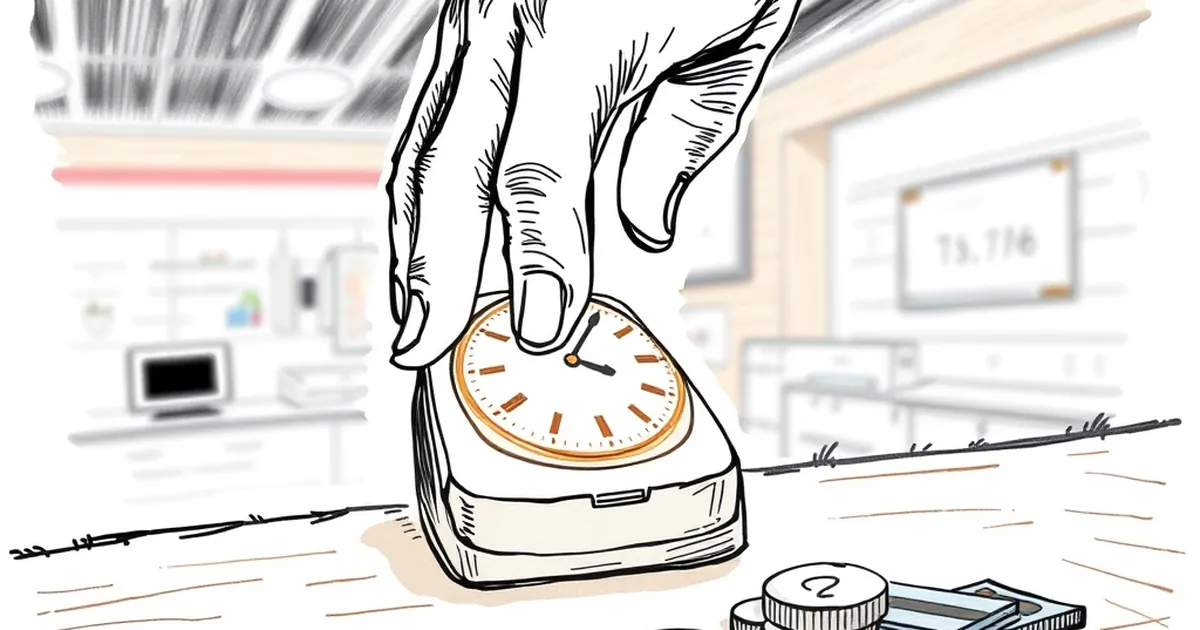
The checkout page looked perfect. The price was right, the shipping was free, and my thumb was hovering over the "Pay Now" button. Then, nothing happened. For exactly 0.4 seconds, the button didn’t respond. It was just a flicker—a tiny lag in the connection. But in that sliver of time, my brain did something remarkable: it re-evaluated the entire transaction. Did I really need the noise-canceling headphones? Or was I just chasing the dopamine hit of a good deal?
That 0.4 seconds is where the worlds of payment infrastructure and behavioral psychology collide. We often think of Visa and Mastercard as neutral conduits—pipes moving data. But the speed of that pipe isn't just a technical metric; it’s a psychological variable that shapes the story we tell ourselves about spending. Let’s pull back the curtain on what happens in the milliseconds between "confirm" and "receipt," and why a single half-second can be the difference between a purchase and a retreat.
The Physics of Friction vs. The Chemistry of Momentum
For decades, the industry mantra has been "reduce friction." The logic is simple: every extra second of load time or every additional form field gives the buyer time to think, and thinking is the enemy of impulse. This is rooted in the concept of cognitive load—the mental effort required to process a decision. The easier the process, the less we engage the analytical part of our brain (the System 2 thinker, as Daniel Kahneman would call it) and the more we rely on the automatic, emotional System 1.
But here’s the twist: the relationship between delay and decision isn't linear. It’s a U-curve.
- Zero to 0.2 seconds: This feels instantaneous. The purchase feels like a natural extension of the desire. The "reward" (the confirmation) arrives so quickly that it merges with the "action" (the click). This is the zone of pure flow.
- 0.3 to 0.7 seconds: This is the "magic zone." It’s slow enough to feel like a deliberate process, but fast enough to prevent boredom. This slight pause actually increases the perceived value of the outcome. Psychologists call this the "peak-end rule" — we remember experiences by their most intense point and their final moment. A 0.4-second pause creates a tiny peak of anticipation before the end.
- 1 second and beyond: This is where the wheels fall off. The delay moves from "processing" to "waiting." Here, the brain activates the default mode network—the part of the brain responsible for mind-wandering and self-reflection. You start thinking about your bank balance, the return policy, or that bill you forgot to pay. The delay has given your System 2 brain time to veto the impulse.
The fascinating part is that the payment networks have engineered their systems to land squarely in that 0.4-second sweet spot. They have discovered that a perfectly instant transaction feels robotic, while a slightly delayed one feels human.
Variable Reinforcement and the "Swipe" Ritual
We can't talk about payment behavior without acknowledging the elephant in the room: the reward loop. When you tap your card or phone, you aren't just getting a product; you're getting a confirmation stimulus. This is where the concept of variable-ratio reinforcement comes into play—a schedule of rewards where the response is reinforced after an unpredictable number of responses.
In the context of payments, the reward isn't the product itself (that comes later). The immediate reward is the approval. When you tap a contactless terminal, you don't know if it will approve instantly, take 0.4 seconds, or—gasp—decline. This unpredictability makes the approval itself slightly addictive.
Mastercard’s "Priceless" campaign tapped into this emotional release, but the physical mechanics matter too. The haptic feedback on a terminal—the little buzz or beep—is a conditioned stimulus. It signals the end of the uncertainty. If that buzz comes too fast, it feels like a vending machine. If it comes too slow, it feels like a judgment. The 0.4-second delay is the perfect dramatic pause that allows the brain to savor the "yes."
This is why the most successful payment apps don't just show a checkmark; they animate it. They draw a circle that fills, or a line that sweeps across. They are intentionally adding micro-delays to create a sense of ritual. They are borrowing from the psychology of slot machine design—not to encourage gambling, but to create a moment of closure that feels earned.
The Invisible Weight of "Authorization"
Now, let’s look at the darker side of the delay: the decline. When your card is declined, the system usually responds faster than 0.4 seconds. Why? Because the algorithm has already made a decision based on loss aversion—the principle that losses are twice as psychologically powerful as gains.
From the bank's perspective, a declined transaction is a loss avoided. But from your perspective, it’s a social and emotional shock. The speed of the decline is brutal. It leaves no room for negotiation. You are left with a feeling of rejection, not just a technical error.
However, there is a new frontier in payment psychology: the soft decline. This is where the system takes that 0.4-second pause to do something clever. Instead of a hard "No," it sends a prompt to your phone: "Did you try this? Or perhaps this?" This delay turns a potential moment of shame into a moment of problem-solving. It acknowledges that the risk-taking part of your brain (the desire to buy) is active, but it gives the risk-averse part (the bank) a chance to find a middle ground.
This is the future of the interaction. The delay is no longer just a technical hiccup; it is a negotiation window. The 0.4 seconds becomes a space where the network asks, "Are you sure?" not with a pop-up, but with a silent algorithmic check that might offer a "pay over time" option or a "use rewards points" alternative.
The "Buy Now, Pay Later" Paradox
The rise of BNPL services has thrown a wrench into the speed equation. By deferring the financial pain, they remove the immediate loss aversion. The transaction feels less like a payment and more like a promise.
But here’s the behavioral twist: BNPL platforms often have slower checkout processes than a standard credit card swipe. They require you to select a plan, read a few terms, and confirm a schedule. This added friction is intentional. It creates a "cooling-off" period that reduces buyer's remorse. The 0.4 seconds has been stretched into 0.4 minutes, but the psychological outcome is the same—a crafted sense of agency.
The lesson for us as consumers is that the delay is never neutral. It is a design element. When a checkout process is silky smooth, you are being optimized for speed. When it has a slight pause, you are being optimized for commitment.
Rewiring Your Personal Checkout
So, what does this mean for your next purchase? You can weaponize this knowledge.
1. The "Artificial Pause" Technique: The next time you are about to click "buy," deliberately introduce a 0.4-second delay on your end. Take a breath. That tiny pause—the same amount of time the network uses—is enough to shift your brain from System 1 (impulse) to System 2 (logic). You aren't stopping the purchase; you are just giving yourself the same dignity of a "processing" moment.
2. Audit the Speed: Pay attention to whether the payment page feels "too fast." If a checkout is suspiciously quick, it is often designed to bypass your risk assessment. Conversely, if it's slow, it might be a sign that the merchant is struggling, or that your bank is uncertain. A 0.4-second delay is the goldilocks zone—neither a trap nor a warning.
3. The "Post-Delay" Reflection: After the payment goes through, don't immediately close the app. Sit with the confirmation screen for a second. Notice the feeling of release. By acknowledging that moment, you train your brain to recognize the difference between a value-based purchase and a dopamine-driven transaction.
The payment networks have spent billions perfecting the 0.4 seconds of silence. They have turned a technical necessity into a psychological lever. The next time you feel that tiny lag, don't just stare at the spinner. Recognize it for what it is: a moment of choice, not just a moment of processing. The delay isn't just about moving money; it's about moving you. And knowing that is the first step in taking control of the click.